Source Acid and Alkali Resistant Benchtop Fume Hood for Labs
Find 30 acid and alkali resistant benchtop fume hood options from Chinese manufacturers. Compare stainless steel and PP models with corrosion resistance, heat resistance, and explosion-proof features for electronics and semiconductor labs.
Key considerations
Products List




Comprehensive Sourcing Guide
Acid and Alkali Resistant Benchtop Fume Hood Sourcing Guide
Sourcing laboratory ventilation equipment requires a precise understanding of material compatibility, structural integrity, and operational safety. The acid and alkali resistant benchtop fume hood is a critical component in environments where chemical handling poses significant risks to both personnel and infrastructure. Buyers must navigate a market that offers various configurations, from standard slit types to bypass and natural ventilation systems, each serving distinct airflow and containment needs. This guide provides evidence-based procurement strategies to help sourcing professionals evaluate suppliers, verify technical claims, and secure reliable supply chains for laboratory furniture.
The following sections detail the specific attributes observed in current market listings, including material compositions like stainless steel and polypropylene (PP), as well as functional features such as corrosion and explosion resistance. By focusing on verified product data and established industry practices, this guide aims to equip buyers with the knowledge to make informed decisions. The emphasis is on due diligence, ensuring that every procurement decision is backed by concrete specifications rather than marketing assertions.
Product Scope and Observed Listing Signals
The current market for benchtop fume hoods presents a diverse range of options tailored to specific laboratory requirements. Observed listings indicate a price range of $150 to $5,000 USD, reflecting variations in material quality, size, and customization levels. Minimum Order Quantities (MOQs) typically range from 1 to 5 units, suggesting that suppliers are flexible enough to accommodate both single-unit replacements and small-scale laboratory outfitting projects. This variability allows buyers to scale their procurement efforts without being locked into large industrial orders, which is particularly useful for research institutions or smaller chemical plants.
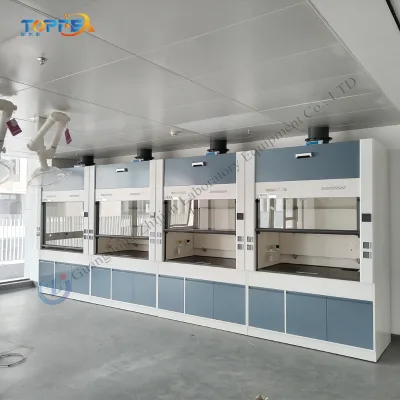
Product attributes observed in listings highlight key differentiators such as hood type, material, and specialized features. Common types include slit type, bypass type, and natural ventilation models, with some listings specifying walk-in fume hood configurations for larger-scale operations. Materials frequently cited include stainless steel, PP, and FRP, each offering distinct advantages in terms of durability and chemical resistance. Features such as corrosion resistance, heat resistance, and acid & alkali resistance are prominently advertised, indicating that these hoods are designed for harsh chemical environments. Additionally, some units come with specialized worktops made from phenolic resin, epoxy resin, or ceramic, providing further protection against chemical spills and thermal shock.
Technical Specifications to Verify
When evaluating technical specifications, buyers should prioritize the verification of material composition and structural dimensions. Stainless steel and PP are common materials, but the grade of stainless steel and the thickness of the PP sheets can vary significantly between suppliers. It is essential to confirm that the material meets the required resistance standards for the specific chemicals being used in the laboratory. Dimensions are another critical factor, with standard sizes observed including 1200x850x2350mm, 1500x850x2350mm, and 1800x850x2350mm. Buyers must ensure that the selected dimensions fit within the available laboratory space and comply with ergonomic and safety guidelines.
Airflow and ventilation mechanisms are equally important technical aspects that require careful verification. Listings mention various types, such as slit type and bypass type, which affect how air is drawn into and expelled from the hood. Natural ventilation options are also available, though they may not provide the same level of containment as mechanically ventilated systems. Buyers should inquire about the airflow velocity control features, as these are crucial for maintaining a safe working environment. Additionally, the visual window material, often described as anti-explosive glass, should be checked for impact resistance and clarity to ensure that operators can monitor experiments safely.
Compliance and Safety Documentation
Compliance with safety standards is non-negotiable when sourcing fume hoods for laboratory use. While specific certification statuses such as CE, ISO 9001, and ISO 14001 are mentioned in some listings, buyers should not assume that all suppliers hold these certifications without verification. It is crucial to request copies of relevant certificates and verify their authenticity with the issuing bodies. Compliance with local and international safety standards ensures that the fume hood meets minimum requirements for structural integrity, electrical safety, and chemical containment.
Safety features such as explosion-proof construction and fireproof materials are highlighted in several listings, indicating a focus on hazard mitigation. Buyers should verify that these features are not just marketing claims but are backed by test results or third-party certifications. The inclusion of safety fittings such as lab faucets, gas corks, cup sinks, and sockets should also be checked to ensure that they are compatible with the laboratory’s existing infrastructure. Additionally, the warranty period, often listed as one year, should be reviewed to understand the supplier’s commitment to product quality and after-sales support.
Cost Drivers and Commercial Terms
Several factors influence the cost of acid and alkali resistant benchtop fume hoods, including material quality, customization options, and packaging requirements. Stainless steel units tend to be more expensive than those made from PP or FRP due to the higher cost of raw materials and manufacturing processes. Customization options, such as specific dimensions or specialized worktops, can also increase the price. Buyers should request detailed quotes that break down these costs to understand the value proposition of each supplier.
Commercial terms such as payment methods, shipping arrangements, and lead times are critical components of the procurement process. Listings indicate that products are typically packed in standard export wooden cases or bubble film with hard cotton and wooden packages to ensure safe transit. Buyers should clarify who is responsible for shipping and insurance costs, as well as the expected lead time from order placement to delivery. Understanding these terms helps in budgeting accurately and avoiding unexpected expenses that can impact the overall project timeline.
Supplier Qualification and Quality Control
Supplier qualification is a vital step in ensuring the reliability of the sourced fume hoods. Buyers should assess suppliers based on their production capabilities, quality control processes, and after-sales service offerings. Some suppliers provide video outgoing inspections, which allow buyers to verify the condition of the product before shipment. This feature can significantly reduce the risk of receiving damaged or non-conforming goods. Additionally, suppliers that offer engineers available to service machinery overseas provide an added layer of support, which is particularly valuable for complex installations or troubleshooting.
Quality control measures should be clearly defined and agreed upon before placing an order. Buyers should inquire about the testing procedures used to verify the corrosion resistance, heat resistance, and other claimed features of the fume hoods. Requesting sample units or conducting factory audits can provide further assurance of the supplier’s quality standards. It is also important to establish clear communication channels for addressing any issues that may arise during or after the installation process.
Long-Term Procurement Checks
Long-term procurement success depends on establishing a robust relationship with suppliers and implementing regular performance reviews. Buyers should monitor the performance of the fume hoods in the laboratory environment, tracking any issues related to durability, maintenance, or safety. Regular feedback from laboratory staff can provide valuable insights into the practical usability and effectiveness of the equipment. This information can be used to refine future procurement decisions and negotiate better terms with suppliers.
Continuous improvement in the supply chain is essential for maintaining operational efficiency and safety. Buyers should stay informed about advancements in fume hood technology and materials, which may offer improved performance or cost savings. Building a network of trusted suppliers can provide flexibility in sourcing and reduce the risk of supply chain disruptions. By focusing on long-term partnerships and continuous evaluation, buyers can ensure that their laboratory infrastructure remains safe, efficient, and compliant with evolving standards.
FAQs
What materials are used for acid and alkali resistant benchtop fume hoods?
These hoods are commonly constructed from stainless steel, PP, or FRP to ensure durability against corrosive chemicals. Some models also feature worktops made from phenolic resin, epoxy resin, or ceramic. The choice of material depends on the specific chemical exposure levels and the required lifespan of the laboratory equipment in industrial settings.
Can acid and alkali resistant benchtop fume hoods be customized?
Yes, customization is available for many models to meet specific laboratory requirements. Buyers can often select from various hood types, such as standard or bypass designs, and choose different worktop materials. Customization options may also include specific dimensions and features like explosion-proof glass or specialized ventilation systems for unique experimental needs.
What are the standard dimensions for these fume hoods?
Standard sizes typically include widths of 1200mm, 1500mm, and 1800mm, with a consistent depth of 850mm and height of 2350mm. Some models may also offer a 1000mm width option. These dimensions are designed to fit standard laboratory layouts while providing adequate workspace for handling hazardous materials safely and efficiently.
What features ensure safety in acid and alkali resistant benchtop fume hoods?
Key safety features include corrosion resistance, heat resistance, and explosion-proof construction. Many units are equipped with anti-explosive glass visual windows and provide video outgoing-inspection for quality assurance. Additional fittings like lab faucets, gas corks, and cup sinks enhance functionality, while the design supports effective exhaust and velocity control for hazardous fumes.
Where are these fume hoods typically manufactured?
These products are primarily manufactured in China, with specific origins noted in Suzhou and Guangdong. Manufacturers often provide standard export wooden case packing to ensure safe transit. Buyers can expect after-sales service support, including engineers available to service machinery overseas, ensuring long-term operational reliability for laboratory facilities worldwide.
What warranty and after-sales support are provided?
A standard one-year warranty is typically provided for these laboratory furniture items. After-sales service includes the availability of engineers to service machinery overseas, ensuring technical support is accessible globally. This support structure helps maintain the integrity of the fume hood's performance, particularly for critical applications in electronics, opto-electronics, and semiconductor industries.